The jammy, sticky-sweet edge where the roasted fig meets the salty, tangy smear of goat cheese. That’s the whole point of this crostini. Everything else—the crunch of the toast, the drizzle of honey, the tiny pop of fresh thyme—is just there to support that one perfect bite. I didn’t set out to make a fancy appetizer. Honestly, I was just trying to use up a pint of figs that were about two days past their prime. They were soft, almost too soft, and I was this close to tossing them. But something about the way they looked, all wrinkled and heavy with sugar, made me think they needed heat, not the compost bin.
I had a log of goat cheese in the fridge (doesn’t everyone?), a stale baguette that needed rescuing, and a sudden, stubborn hunch that roasting those figs would turn them into something completely different. And it did. The roasting concentrates the sweetness, turns the texture into a spoonable jam, and fills your kitchen with a smell that’s almost unfair. It’s the kind of smell that makes people wander into the kitchen and ask, “What’s for dinner?” even when it’s only 3 PM. That’s how this Perfect Roasted Fig and Goat Cheese Jam Crostini was born—not from a plan, but from a near-miss with the trash can. It stuck because it’s the easiest way to look like you tried really hard when you barely tried at all.
Why You’ll Love This Recipe
Let’s be real—there are a million appetizer recipes out there. But this one? It’s different. It’s the kind of thing that feels special enough for a holiday party but simple enough for a Tuesday night snack. I’ve tested this version more times than I care to admit (my family has staged a polite intervention), and here’s why it’s the one you’ll keep coming back to.
- Sweet & Savory Perfection: The roasted figs get all jammy and caramelized, which plays beautifully against the tangy, creamy goat cheese. It’s a flavor combo that just works, every single time.
- Deceptively Simple: You only need a handful of ingredients, and most of the work is done by the oven. No complicated techniques, no fancy equipment—just honest, delicious food.
- Ready in Under 30 Minutes: From start to finish, you can have these on the table in about 25 minutes. That’s faster than ordering takeout and way more impressive.
- Perfect for Entertaining: Whether it’s a fancy dinner party, a casual get-together, or a holiday spread, these crostini are always the first thing to disappear. I’ve watched people hover around the platter, grabbing “just one more.”
- Crowd-Pleaser (Yes, Really): Even people who think they don’t like goat cheese love this. The roasting mellows the cheese’s sharpness, and the sweetness of the figs makes it approachable for even the pickiest eaters.
This isn’t just another crostini recipe. It’s the one where the textures and flavors line up so perfectly that you’ll find yourself making excuses to serve it. It’s comfort food that feels fancy, and that’s a rare thing.
What Ingredients You Will Need
This recipe relies on a short list of simple, high-quality ingredients. The magic happens when they come together, but each one plays a crucial role. Here’s what you’ll need to grab.
- Fresh Figs (1 pint, about 8-10 figs): Look for figs that are ripe but still firm enough to hold their shape during roasting. Black Mission or Brown Turkey figs work beautifully. If they’re a little soft, that’s actually perfect—they’ll break down into a jammy consistency faster. (I’ve used slightly overripe figs here, and honestly, they’re the best.)
- Goat Cheese (4 oz, log style): A soft, creamy goat cheese is ideal. I prefer the one from Vermont Creamery for its tangy flavor and smooth texture, but any good-quality log will do. Let it come to room temperature before spreading—it makes a huge difference.
- Baguette (1 small or ½ large): A crusty baguette is non-negotiable. You want something with a sturdy exterior that can hold up to the toppings without getting soggy. Day-old bread is actually better here—it toasts up crispier.
- Honey (2 tablespoons): A good-quality honey adds a floral sweetness that ties everything together. I like using a local wildflower honey, but any liquid honey works. Avoid the crystallized stuff for this.
- Fresh Thyme (4-5 sprigs): Thyme is the unsung hero here. Its earthy, slightly lemony flavor cuts through the richness of the cheese and the sweetness of the figs. Don’t skip it—dried thyme just won’t give you the same bright pop.
- Extra-Virgin Olive Oil (2 tablespoons): You’ll use this to brush the baguette slices before toasting. A good olive oil adds flavor, not just moisture. I use a robust, peppery one from California Olive Ranch.
- Balsamic Glaze (for drizzling, optional but recommended): A quick drizzle of balsamic glaze right before serving adds a tangy-sweet finish that makes the whole thing sing. You can buy it pre-made or reduce balsamic vinegar on the stove until it’s syrupy.
- Salt and Black Pepper (to taste): A pinch of flaky sea salt (like Maldon) right at the end is a game-changer. It enhances all the flavors and adds a tiny crunch.
Substitution Note: If you can’t find fresh figs, you can use dried figs rehydrated in warm water for 10 minutes, then drained. The texture will be chewier, but the flavor is still fantastic. For a dairy-free version, use a soft cashew-based cheese spread—it won’t be exactly the same, but it’s still delicious.
Equipment Needed
You don’t need a fancy kitchen to pull this off. Here’s what you’ll need, plus a few tips from my own trial and error.
- Baking Sheet (rimmed): A rimmed baking sheet is essential for roasting the figs—it catches any sticky juices that might bubble over. I use a half-sheet pan, which is the standard 18×13 inch size.
- Parchment Paper or Silicone Baking Mat: This makes cleanup a breeze. The fig jam can get sticky, and you don’t want to be scrubbing that off your pan. Trust me on this one.
- Chef’s Knife and Cutting Board: A sharp knife makes quick work of halving the figs and slicing the baguette. A dull knife will just squish the figs, so sharpen up first.
- Pastry Brush (optional): For brushing the olive oil onto the baguette slices. You can also just drizzle it on and spread it with your fingers—no judgment here.
- Small Saucepan (if making balsamic glaze): If you’re making your own balsamic glaze, you’ll need a small saucepan. It’s a 10-minute process, but totally worth it.
- Serving Platter: A wooden board or a white ceramic platter makes these crostini look as good as they taste. Presentation matters, especially when you’re serving guests.
That’s it. No stand mixer, no food processor, no special gadgets. This is a recipe that proves you don’t need a lot of stuff to make something truly memorable.
Preparation Method
Alright, let’s get cooking. This is a straightforward process, but I’ll walk you through each step with the little details that make a big difference.
- Preheat your oven to 400°F (200°C). Line a rimmed baking sheet with parchment paper. While the oven heats, wash and dry your figs. Trim off the tough stem end, then slice each fig in half lengthwise. If your figs are large, you can quarter them—you want pieces that are roughly bite-sized.
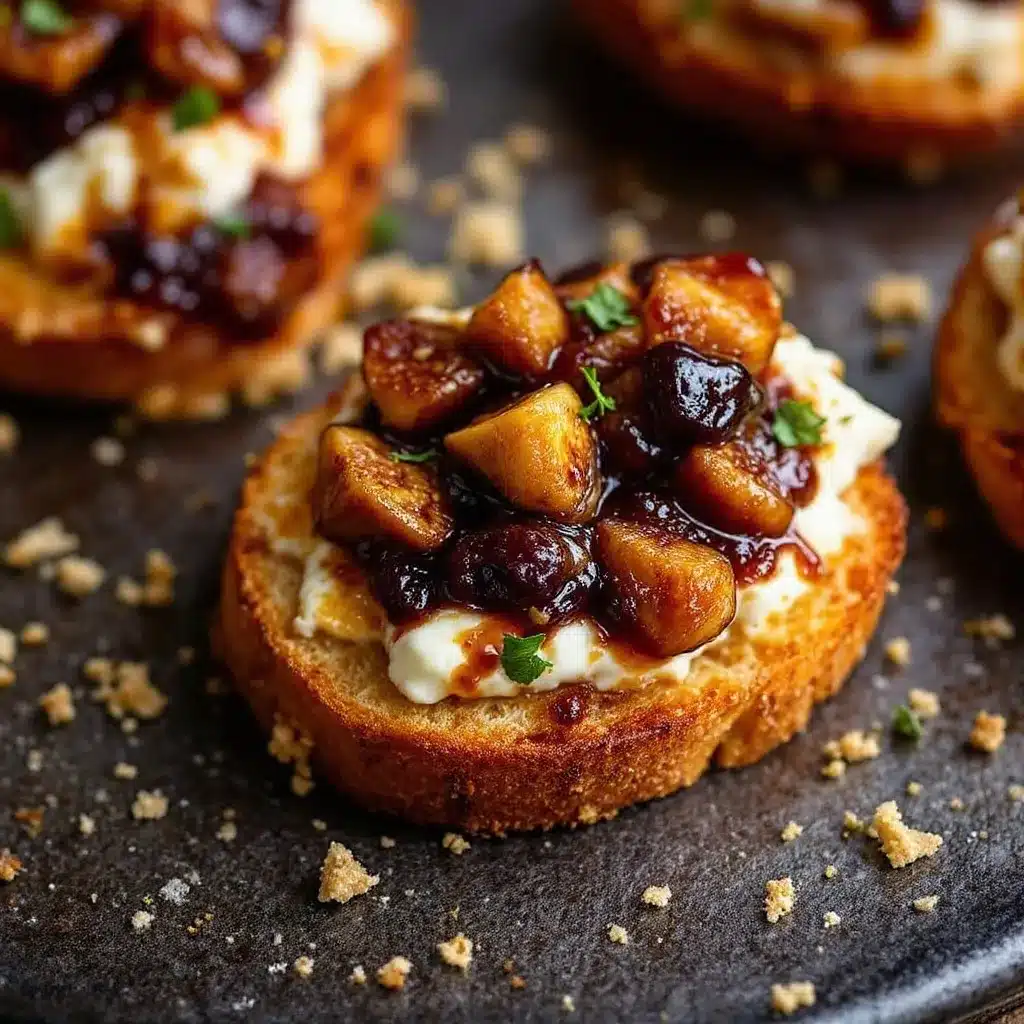
- Roast the figs. Arrange the fig halves cut-side up on the prepared baking sheet. Drizzle with 1 tablespoon of honey and a tiny pinch of salt. Toss gently with your hands to coat, then spread them back out in a single layer. Roast for 15-18 minutes, until the figs are soft, jammy, and the juices are bubbling. The edges should look caramelized but not burnt. (If your figs were very ripe, start checking at 12 minutes.) Remove from the oven and let them cool on the sheet for 5 minutes. The juices will thicken into a syrupy jam as they cool.
- Meanwhile, prepare the baguette. While the figs roast, slice your baguette into ½-inch thick rounds on a slight diagonal. This gives you more surface area for toppings. Arrange the slices on a separate baking sheet (or the same one, after the figs are done). Brush both sides lightly with olive oil. Toast in the oven (at the same 400°F) for 5-7 minutes, flipping halfway, until golden and crisp. Keep an eye on them—they go from golden to burnt fast.
- Assemble the crostini. Let the goat cheese come to room temperature (about 15 minutes out of the fridge is perfect). Spread a generous smear of goat cheese onto each warm baguette slice. Don’t be shy—you want a nice, even layer that covers the bread.
- Top with roasted figs. Using a spoon, gently place 2-3 fig halves (with some of the jammy juices) on top of the goat cheese. The figs should be soft and almost falling apart—that’s exactly what you want.
- Finish and serve. Drizzle the remaining 1 tablespoon of honey over the assembled crostini. Sprinkle fresh thyme leaves (just strip them off the stems) over the top. If you’re using balsamic glaze, drizzle that on now. Finish with a pinch of flaky sea salt and a crack of black pepper. Serve immediately, while the bread is still warm and the cheese is soft.
Sensory cue: When the figs come out of the oven, you should smell a deep, sweet, almost wine-like aroma. The edges will be sticky and dark, and the juices will be bubbling around them. That’s the signal that they’re done.
Cooking Tips & Techniques
After making this recipe about a dozen times (seriously), I’ve picked up a few tricks that make it even better. Here’s what I’ve learned, including some honest mistakes.
- Don’t overcrowd the baking sheet: The figs need a little breathing room to caramelize properly. If they’re piled on top of each other, they’ll steam instead of roast, and you’ll end up with mushy figs instead of jammy ones. Spread them out in a single layer with space between each piece.
- Room temperature cheese is non-negotiable: Cold goat cheese is crumbly and hard to spread. I learned this the hard way when I tried to rush the process. Let it sit on the counter for at least 15 minutes before you start assembling. If you’re in a hurry, you can microwave it for 5-10 seconds, but be careful—it can get too soft and runny.
- Toast the bread right before serving: Crostini are best when they’re still warm and crunchy. If you toast them too far in advance, they’ll get stale and tough. Toast them while the figs are roasting, then assemble immediately. It’s a small timing trick that makes a big difference.
- Use flaky salt at the end: This is one of those chef’s secrets that takes the recipe from good to great. A pinch of Maldon or another flaky sea salt adds a burst of salinity and a delicate crunch that contrasts with the soft figs and creamy cheese. Regular table salt will just dissolve—don’t use it here.
- One mistake I made: The first time I made this, I didn’t let the figs cool before assembling. The hot figs melted the goat cheese into a puddle, and the whole thing turned into a soggy mess. Let the figs cool for those 5 minutes—it’s worth the wait.
Variations & Adaptations
This recipe is a great starting point, but it’s also incredibly flexible. Here are a few ways to make it your own, based on what I’ve tried and loved.
- Savory Herb Twist: Swap the honey for a drizzle of balsamic vinegar before roasting the figs. Add a few sprigs of fresh rosemary to the baking sheet. The rosemary infuses the figs with an earthy, piney flavor that’s amazing with the goat cheese. I tried this for a dinner party, and it was a hit.
- Nutty Crunch: After assembling, sprinkle toasted walnuts or pecans over the top. The crunch adds a whole new dimension. Toast the nuts in a dry skillet over medium heat for 3-4 minutes until fragrant—just watch them, they burn fast.
- Dairy-Free Version: Use a soft, spreadable cashew cheese or a vegan cream cheese. I’ve tested this with a brand called Miyoko’s, and it works beautifully. The tanginess is a little different, but the creamy texture is spot on.
- Spicy Kick: Add a thin slice of fresh jalapeño or a drizzle of hot honey (like Mike’s Hot Honey) on top. The heat cuts through the richness and adds a surprising pop. This is my husband’s favorite variation.
- Seasonal Swap: In the fall, swap the figs for roasted pears or apples. The process is exactly the same—just core and slice them, then roast until soft. It’s a cozy, autumnal twist that feels just right when the weather turns cold.
Serving & Storage Suggestions
These crostini are best enjoyed fresh, but I’ve got a few tips for making them work for your schedule.
Serving Temperature: Serve these warm or at room temperature. The bread should still have a slight crunch, and the cheese should be soft and spreadable. If you’re serving them at a party, assemble them just before guests arrive and let them sit out for up to 30 minutes—they’ll still be delicious.
What to Serve With Them: These crostini pair beautifully with a crisp white wine like Sauvignon Blanc or a light, fruity red like Pinot Noir. For a non-alcoholic option, try the fresh refreshing cucumber mint green tea cooler—the cool, herbaceous notes balance the richness of the crostini perfectly. They also work great alongside a simple green salad or a bowl of easy Mediterranean chickpea and feta stuffed mini peppers for a full appetizer spread.
Storage: These are really best eaten the day they’re made. The bread will get soft if you try to store assembled crostini. However, you can store the components separately. Keep the roasted figs in an airtight container in the fridge for up to 3 days. The toasted baguette slices can be stored in a ziplock bag at room temperature for 2 days. Just re-crisp them in a 350°F oven for 3-4 minutes before assembling.
Reheating: If you have leftover assembled crostini (unlikely, but possible), you can reheat them in a 350°F oven for 5 minutes. The bread won’t be as crunchy, but the flavors will still be great. Avoid the microwave—it will turn the bread into a sad, chewy mess.
Nutritional Information & Benefits
This recipe is a treat, but it also has some surprising nutritional perks. Here’s the breakdown per serving (2 crostini).
- Calories: Approximately 220-250 calories per serving. Not bad for something that feels so indulgent.
- Protein: About 7 grams, mostly from the goat cheese. Figs also contain a small amount of protein.
- Fiber: 3-4 grams per serving. Figs are a great source of dietary fiber, which supports digestive health.
- Calcium: Around 80 mg from the goat cheese, which is good for bone health.
- Antioxidants: Figs are rich in polyphenols and flavonoids, which help fight inflammation and oxidative stress. The honey and balsamic glaze also contain beneficial antioxidants.
Dietary Considerations: This recipe is naturally vegetarian and can be made gluten-free by using a gluten-free baguette. It’s not dairy-free in its standard form, but the dairy-free variation works well. Figs are low in sodium and contain no cholesterol, making this a heart-friendly option when enjoyed in moderation.
I love that this appetizer doesn’t feel heavy or guilt-inducing. It’s the kind of food that satisfies your cravings while still being made from real, whole ingredients. That’s a win in my book.
Conclusion
So there you have it—a recipe that started as a last-minute rescue mission and turned into one of my most-requested dishes. The Perfect Roasted Fig and Goat Cheese Jam Crostini is proof that the best recipes often come from the simplest moments: a soft fig, a log of cheese, and a hunch that they’d be better together. It’s the kind of appetizer that makes people stop mid-conversation and just eat. And honestly, that’s the highest compliment I can give.
I’d love to hear how these turn out for you. Did you add your own twist? Serve them at a party? Eat the whole batch by yourself on a Tuesday night? (No judgment—I’ve been there.) Drop a comment below and let me know. And if you’re looking for another easy, impressive dish to round out your menu, try this easy crispy lemon rosemary salmon sheet pan dinner—it’s just as simple and just as good. Happy cooking!
Frequently Asked Questions
Can I use dried figs instead of fresh?
Yes, you can. Rehydrate dried figs by soaking them in warm water for 10 minutes, then drain and pat them dry before roasting. The texture will be chewier, but the flavor is still delicious.
How do I prevent the bread from getting soggy?
Toast the baguette slices until they are golden and crisp, and let them cool slightly before adding the toppings. Also, let the roasted figs cool for 5 minutes so the hot juices don’t soak into the bread immediately.
Can I make the roasted figs ahead of time?
Absolutely. You can roast the figs up to 3 days in advance and store them in an airtight container in the refrigerator. Let them come to room temperature before assembling the crostini.
What’s the best way to reheat leftover crostini?
Reheat assembled crostini in a 350°F oven for 5 minutes to re-crisp the bread. Avoid the microwave, as it will make the bread soft and chewy.
Can I use a different cheese instead of goat cheese?
Yes. A soft, spreadable cheese like brie, ricotta, or even a creamy feta works well. Each will give a slightly different flavor, but they all pair beautifully with the roasted figs.
Pin This Recipe!
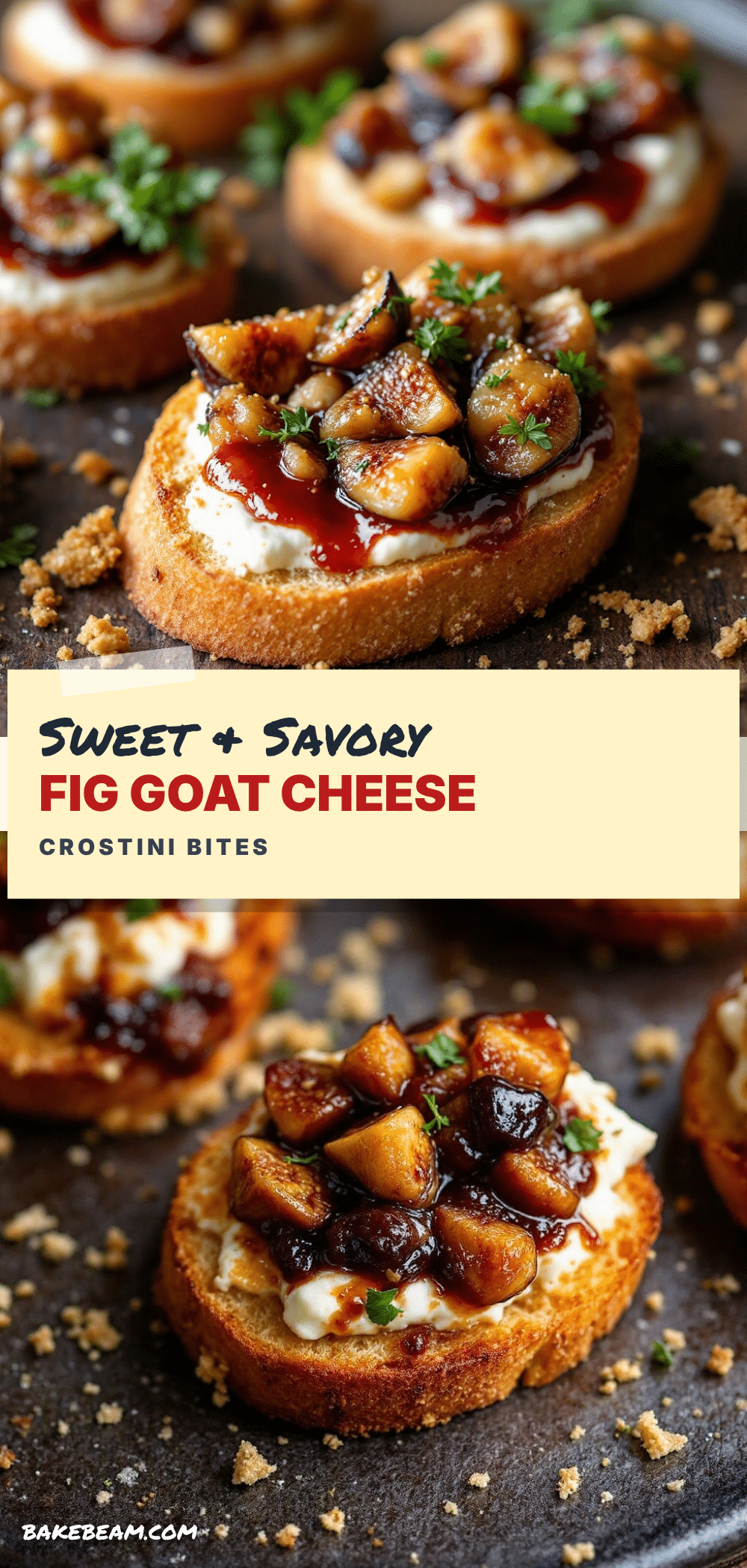
Perfect Roasted Fig & Goat Cheese Crostini Recipe

Jammy roasted figs meet tangy goat cheese on crispy baguette slices, drizzled with honey and fresh thyme. This easy, elegant appetizer is ready in under 30 minutes and perfect for entertaining.
- Prep Time: 10 minutes
- Cook Time: 20 minutes
- Total Time: 30 minutes
- Yield: 4 servings (about 8-10 crostini) 1x
- Category: Appetizer
- Cuisine: Mediterranean
Ingredients
- 1 pint fresh figs (about 8–10 figs), stems trimmed and halved lengthwise
- 4 oz goat cheese (log style), at room temperature
- 1 small baguette (or ½ large), sliced into ½-inch thick rounds on the diagonal
- 2 tablespoons honey, divided
- 4–5 sprigs fresh thyme, leaves stripped
- 2 tablespoons extra-virgin olive oil
- Balsamic glaze, for drizzling (optional)
- Flaky sea salt (e.g., Maldon) and freshly ground black pepper, to taste
Instructions
- Preheat oven to 400°F (200°C). Line a rimmed baking sheet with parchment paper.
- Arrange fig halves cut-side up on the prepared baking sheet. Drizzle with 1 tablespoon honey and a tiny pinch of salt. Toss gently to coat, then spread in a single layer. Roast for 15-18 minutes, until soft, jammy, and juices are bubbling. Let cool on the sheet for 5 minutes.
- While figs roast, slice baguette into ½-inch thick rounds on a slight diagonal. Arrange on a separate baking sheet. Brush both sides lightly with olive oil. Toast at 400°F for 5-7 minutes, flipping halfway, until golden and crisp.
- Spread a generous smear of room-temperature goat cheese onto each warm baguette slice.
- Top each with 2-3 roasted fig halves and some of the jammy juices.
- Drizzle remaining 1 tablespoon honey over the crostini. Sprinkle fresh thyme leaves on top. If using, drizzle with balsamic glaze. Finish with a pinch of flaky sea salt and a crack of black pepper. Serve immediately.
Notes
Let the roasted figs cool for 5 minutes before assembling to prevent the goat cheese from melting into a puddle. Use room-temperature goat cheese for easy spreading. Toast the baguette slices just before serving for maximum crunch. Flaky sea salt at the end is a game-changer.
Nutrition
- Serving Size: 2 crostini
- Calories: 235
- Sugar: 18
- Sodium: 280
- Fat: 10
- Saturated Fat: 4
- Carbohydrates: 30
- Fiber: 4
- Protein: 7
Keywords: roasted fig crostini, goat cheese appetizer, fig and goat cheese, easy appetizer, holiday appetizer, fig recipe, crostini recipe