The way the bark shatters when you bite into it—that thin, dark, almost brittle crust giving way to meat so tender it barely holds together—that’s the whole point of these smoked pulled pork sliders. Everything else, the tangy slaw, the soft brioche bun, the extra swipe of sauce, is just supporting the main event. I spent three Labor Days getting this right. The first year, I pulled the shoulder off too early and ended up with chewy, disappointing shreds that even extra sauce couldn’t save. The second year, I got the smoke right but rushed the rest, slapping dry meat onto sad store-bought rolls. Last year, everything clicked. The smoke rolled thin and blue for twelve hours, the pork hit that perfect 203°F internal temp, and I actually remembered to toast the buns. These sliders are that moment when a whole day of tending a smoker pays off in one perfect, messy bite.
I’m not going to pretend this is a quick weeknight recipe. It’s a project. But it’s the kind of project that rewards you with the best pulled pork you’ve ever made, and honestly, there’s nothing better for a Labor Day cookout. You want something that feeds a crowd without stress, that people actually talk about days later, and that lets you spend the afternoon with a cold drink in your hand instead of hovering over a stove. That’s exactly what these best smoked pulled pork sliders deliver. They’re the reason I look forward to the last long weekend of summer every single year.
The key is trusting the process. You don’t rush the stall, you don’t peek at the meat every hour, and you definitely don’t skip the rest time. I learned that the hard way, but you don’t have to. This recipe gives you everything I figured out through trial and error, so your first batch of smoked pulled pork sliders tastes like you’ve been doing this for years.
Why You’ll Love This Recipe
I’ve tested this recipe more times than I care to admit, tweaking rub ratios, adjusting smoker temps, and swapping out different woods until I landed on something I’d serve to anyone without hesitation. Here’s what makes these sliders stand out from the hundreds of other pulled pork recipes out there.
- Incredible Bark : The dry rub creates a deep, mahogany crust that adds texture and concentrated flavor to every bite. No mushy, steamed meat here.
- Fall-Apart Tender : Low and slow at 225°F for 10-14 hours breaks down all that connective tissue until the pork shreds with almost no effort at all.
- Perfect for a Crowd : A single 8-10 pound pork shoulder feeds 16-20 people easily. Labor Day cookouts suddenly become stress-free.
- Make-Ahead Friendly : The pulled pork actually tastes better the next day, so you can smoke it a day early and just reheat before serving.
- Customizable Heat : The slaw and sauce let you dial the spice level up or down depending on who’s eating. Kids and spice lovers both get what they want.
- That Unforgettable First Bite : There’s a moment when the smoky meat, the creamy slaw, and the soft bun come together that makes everyone at the table go quiet. That’s the moment you’re cooking for.
This isn’t just another pulled pork recipe you found online. It’s the one where the bark stays crackly even after you’ve sauced it, where the meat is juicy without being greasy, and where every single component works together instead of fighting for attention. I’ve had people who swore they didn’t like pulled pork ask for seconds. That’s the kind of recipe this is.
What Ingredients You Will Need
This recipe relies on a handful of quality ingredients and a well-balanced dry rub to build layers of flavor. Nothing here is complicated, but every component plays a specific role in making these the best smoked pulled pork sliders you’ve ever had.
For the Pork Shoulder
- 1 bone-in pork shoulder (8-10 pounds) : Boston butt is ideal. The bone adds flavor and helps the meat cook more evenly. Look for one with good marbling—fat equals flavor and moisture.
- Yellow mustard (¼ cup) : This is your binder. You won’t taste it after smoking, but it helps the rub stick to the meat. French’s works perfectly.
- Apple cider vinegar (¼ cup, for spritzing) : Keeps the surface moist during the long cook and adds a subtle tang that cuts through the richness.
For the Dry Rub

- ½ cup dark brown sugar, packed : Adds sweetness and helps form that beautiful bark. Dark brown has more molasses flavor than light.
- ¼ cup smoked paprika : Not the sweet stuff—get the smoked kind for that deep, barbecue flavor.
- 2 tablespoons kosher salt : I use Diamond Crystal. If you’re using table salt, cut the amount in half.
- 2 tablespoons black pepper, freshly ground : Coarse grind gives you little pops of heat.
- 1 tablespoon garlic powder : Not garlic salt. We’re controlling the salt separately.
- 1 tablespoon onion powder : Adds savory depth without being overpowering.
- 2 teaspoons cayenne pepper : Gives the rub a gentle kick. Cut to 1 teaspoon if you’re serving kids or spice-sensitive guests.
- 2 teaspoons cumin : Adds an earthy warmth that pairs beautifully with the smoke.
For the Slaw
- 1 small green cabbage, shredded (about 4 cups) : Use a mandoline or food processor for even shreds. You want thin, not chunky.
- 1 cup mayonnaise : Duke’s is my go-to for its tangy, eggy flavor. Hellmann’s works too.
- 2 tablespoons apple cider vinegar : Brightens up the creaminess.
- 1 tablespoon honey : Balances the vinegar without making the slaw sweet.
- 1 teaspoon celery seed : That classic coleslaw flavor comes from this tiny seed.
- Salt and pepper to taste
For Serving
- 12-16 slider buns : Brioche buns are ideal—they’re soft, slightly sweet, and sturdy enough to hold all that meat. Potato rolls are a close second.
- Your favorite barbecue sauce : I use a Kansas City-style sweet and tangy sauce, but use whatever you love. Make sure it’s not too thin or it’ll make the buns soggy.
- Butter, for toasting the buns : Don’t skip this step. Toasted buns make everything better.
Equipment Needed
You don’t need a professional setup to make incredible smoked pulled pork, but having the right tools makes the process smoother and more predictable. Here’s what I use and what you can get away with.
- Smoker : I use a Weber Smokey Mountain, but any smoker that holds 225°F for hours works. Pellet grills are the easiest for beginners. Avoid gas grills if you can—they don’t produce the same smoky flavor.
- Instant-read thermometer : A Thermapen is expensive but worth every penny. A cheap probe thermometer works too, just make sure it’s accurate. You absolutely cannot guess when pulled pork is done.
- Wire rack and baking sheet : For holding the seasoned pork overnight in the fridge. The rack lets air circulate so the rub sets properly.
- Spray bottle : For spritzing with apple cider vinegar during the cook. A clean household spray bottle works fine.
- Heavy-duty aluminum foil : For the Texas crutch when you wrap the pork through the stall. Don’t use cheap foil—it tears too easily.
- Two large forks or meat claws : For shredding. Forks work, but claws make the job much faster and more satisfying.
- Large cutting board : You need space to shred 8-10 pounds of meat without making a mess on your counter.
If you don’t have a smoker, you can adapt this recipe for a charcoal grill with indirect heat, but you’ll need to babysit the temperature constantly. I’ve done it—it works, but it’s not as relaxing as using a proper smoker.
Preparation Method
This is where the magic happens. Take your time with each step, and you’ll be rewarded with the best smoked pulled pork sliders your friends have ever tasted.
- Trim and prepare the pork shoulder (15 minutes) : Pat the shoulder dry with paper towels. Trim off any excess fat cap, leaving about ¼ inch. You want some fat for flavor and moisture, but too much prevents the smoke from penetrating. Don’t trim the fat between the muscles—that’s where the juiciness lives.
- Apply the binder and rub (10 minutes) : Coat the entire shoulder with a thin layer of yellow mustard. It seems weird, I know, but trust me—you won’t taste it. Mix all the dry rub ingredients together in a bowl, then apply it generously to the entire surface. Pat it in firmly; you want it to stick, not just sit on top. Wrap the shoulder in plastic wrap and refrigerate overnight. Minimum 8 hours, maximum 24. This step is non-negotiable for the best bark.
- Set up your smoker (20 minutes) : About an hour before you plan to cook, take the pork out of the fridge to come up to room temperature. Meanwhile, set up your smoker for indirect cooking at 225°F. I use hickory wood chunks for this recipe—it’s strong enough to stand up to the pork without overwhelming it. Apple or cherry wood works too if you prefer a milder smoke flavor.
- Start the smoke (first 4-5 hours) : Place the pork shoulder on the smoker grate, fat side up. Close the lid and don’t open it for at least 3 hours. After 3 hours, start spritzing the surface with apple cider vinegar every 45 minutes. This keeps the bark from drying out and adds a subtle tang. You’ll see the internal temperature climb steadily until it hits around 160°F. That’s when things get interesting.
- Survive the stall (2-3 hours) : Somewhere between 160°F and 170°F, the temperature will stop climbing. This is the stall, and it’s where most people panic. Don’t. The moisture in the meat is evaporating, cooling the surface. If you’re in a hurry, wrap the shoulder tightly in heavy-duty foil (the Texas crutch). If you have time, just let it ride. I usually wrap at this point because I want tender meat without waiting an extra 4 hours. Add a splash of apple cider vinegar or apple juice inside the foil before sealing it.
- Finish cooking (3-5 hours) : Return the wrapped pork to the smoker and continue cooking at 225°F. The temperature will start climbing again. You’re looking for an internal temperature of 203°F to 205°F. This is the sweet spot where collagen has broken down into gelatin and the meat will shred like butter. Start checking at 200°F with your probe. It should slide in with almost no resistance—like poking warm butter.
- Rest the pork (1-2 hours) : This is the hardest part because your kitchen will smell incredible. Wrap the foil package in a clean towel and place it in a cooler (no ice) or a warm oven (turned off). Let it rest for at least 1 hour, preferably 2. This allows the juices to redistribute throughout the meat. I once skipped this step because I was hungry, and the meat was noticeably drier. Don’t make my mistake.
- Shred the pork (10 minutes) : Unwrap the pork carefully—there will be a lot of hot liquid. Transfer the meat to a large cutting board or baking sheet. Remove the bone (it should pull out cleanly with zero effort). Use two forks or meat claws to shred the pork into bite-sized pieces. Discard any large pieces of fat. Pour some of the reserved juices back over the shredded meat to keep it moist.
- Make the slaw (10 minutes) : While the pork rests, whisk together the mayonnaise, apple cider vinegar, honey, and celery seed in a large bowl. Add the shredded cabbage and toss to coat. Season with salt and pepper. Cover and refrigerate until you’re ready to serve. The slaw can be made up to 4 hours ahead—it actually gets better as it sits.
- Toast the buns and assemble (10 minutes) : Split the slider buns and butter the cut sides. Toast them on a griddle or in a skillet over medium heat until golden brown. Pile the shredded pork onto the bottom half of each bun. Add a generous spoonful of coleslaw on top. Drizzle with barbecue sauce if you like. Cap with the top bun and serve immediately.
Cooking Tips & Techniques
I’ve made every mistake you can make with smoked pulled pork, and I’m sharing them so you don’t have to. These tips come from actual failures, not theory.
Don’t rush the rub : I once applied the rub and threw the pork on the smoker within 30 minutes. The bark was thin and the flavor was just okay. Letting it sit overnight in the fridge makes a massive difference. The salt penetrates the meat, and the sugar starts drawing out moisture, which helps form that crusty bark. Plan ahead.
Manage your fire carefully : Temperature swings are the enemy of good barbecue. If you’re using a charcoal smoker, light a full chimney of charcoal and let it burn until the coals are mostly gray before adding them. Add wood chunks one at a time rather than dumping them all in at once. You want thin blue smoke, not thick white smoke—that white stuff makes meat taste bitter and acrid.
Use the probe test, not just the thermometer : I’ve had pork shoulders that felt done at 198°F and others that needed 208°F. Every piece of meat is different. The best test is to stick your probe thermometer into the thickest part of the shoulder. If it slides in with no resistance, the meat is done. If you feel any pushback, leave it on the smoker for another 30 minutes and test again.
Don’t overspritz : Opening the smoker every 20 minutes to spritz releases heat and extends your cook time. Stick to every 45 minutes to an hour. Too much spritzing can also wash off your rub, especially in the first few hours when it hasn’t set yet.
Let the meat rest properly : I cannot stress this enough. The rest is not optional. When you pull the pork off the smoker at 203°F, the juices are hot and active. If you shred immediately, those juices run out onto your cutting board instead of staying in the meat. A 2-hour rest in a cooler keeps everything locked in. Your patience will be rewarded.
Season the slaw generously : The slaw needs to hold its own against the rich, smoky pork. Don’t be shy with the salt and pepper. Taste it before serving and adjust—it should be tangy, creamy, and bright, with enough acidity to cut through the fat.
Variations & Adaptations
One of the best things about these best smoked pulled pork sliders is how adaptable they are. Here are some variations I’ve tried and loved.
- Spicy Carolina Style : Swap the Kansas City barbecue sauce for a vinegar-based sauce (apple cider vinegar, red pepper flakes, black pepper, and a touch of sugar). Top the sliders with a spicy jalapeño slaw instead of the creamy version. The heat and tang cut through the richness beautifully.
- Keto-Friendly Version : Skip the buns entirely and serve the pulled pork over a bed of crisp lettuce or in large butter lettuce cups. Use a sugar-free barbecue sauce or just enjoy the pork with extra slaw. The meat itself is naturally low-carb and high in protein.
- Hawaiian Twist : Add ½ cup of crushed pineapple to the barbecue sauce and use Hawaiian sweet rolls instead of brioche. Top with a pineapple-jalapeño slaw for a sweet, spicy, tropical flavor that’s perfect for summer cookouts.
- Smokier Flavor : Use mesquite wood instead of hickory for a bolder, more assertive smoke flavor. Be careful—mesquite can easily overpower the meat if you use too much. Start with one small chunk and add more if needed.
- Indoor Method : If you don’t have a smoker, you can still make excellent pulled pork in the oven. Season the shoulder the same way, place it on a wire rack in a roasting pan, and cook at 300°F for 4-5 hours until it reaches 203°F. Add liquid smoke to the spritz mixture (about 1 teaspoon) to mimic the smoky flavor. It’s not the same as real smoke, but it’s still delicious.
Serving & Storage Suggestions
These sliders are best served immediately after assembling, while the buns are still warm and the slaw is cold and crisp. But the components all keep well separately, which makes this a great make-ahead recipe for parties.
Serving : Arrange the shredded pork, slaw, buns, and sauce on a large platter and let everyone build their own sliders. This is the easiest way to feed a crowd, and it lets guests customize their spice level. Serve with classic barbecue sides like baked beans, corn on the cob, or a simple potato salad. For drinks, a cold beer or a refreshing cucumber mint green tea cooler pairs perfectly with the smoky, tangy flavors.
Storing Leftover Pork : Shredded pork keeps beautifully in the refrigerator for up to 5 days. Store it in an airtight container with some of the reserved cooking juices to keep it moist. The slaw will keep for 2-3 days in the fridge, but it will get watery as it sits—drain off any excess liquid before serving leftovers.
Freezing : Pulled pork freezes exceptionally well. Portion it into freezer-safe bags, squeeze out as much air as possible, and freeze for up to 3 months. Thaw overnight in the refrigerator before reheating.
Reheating : The best way to reheat pulled pork is in a covered dish in a 300°F oven with a splash of apple juice or chicken broth. Heat for 15-20 minutes until warmed through. You can also reheat it in a skillet over medium-low heat, stirring occasionally. Avoid the microwave—it dries out the meat and ruins the texture. I’ve found that the pork actually tastes even better the next day, as the flavors have had more time to meld together.
Nutritional Information & Benefits
While these sliders are definitely a treat, the pulled pork itself is surprisingly nutritious. Pork shoulder is rich in protein, B vitamins, and essential minerals like zinc and selenium. The smoking process adds no extra fat, and the coleslaw brings in some fiber and vitamin C from the cabbage.
Estimated nutrition per slider (1 bun + 3 oz pork + 2 tbsp slaw) : Calories: 380, Protein: 28g, Fat: 18g, Carbohydrates: 22g, Fiber: 2g, Sugar: 8g. These numbers will vary depending on your exact ingredients and portion sizes.
If you’re watching your calories, skip the bun and serve the pork and slaw over a bed of greens. You can also use a lighter slaw dressing made with Greek yogurt instead of mayonnaise. For a complete meal that balances out the richness, consider serving these sliders alongside a fresh quinoa and kale power bowl for a lighter option on the side.
Conclusion
These best smoked pulled pork sliders are more than just a recipe—they’re the centerpiece of a perfect Labor Day cookout. The kind of food that makes people linger at the table, reach for seconds, and ask for the recipe before they’ve even finished chewing. I’ve spent years perfecting this method, and I’m confident it will become your go-to for any summer gathering.
Don’t be afraid to make this recipe your own. Play with the rub, try different woods, experiment with the slaw. The beauty of pulled pork is that it’s forgiving and endlessly customizable. And if you’re looking for other dishes to round out your BBQ spread, I’ve got plenty more ideas on the recipes page that pair beautifully with these sliders.
I’d love to hear how yours turn out. Drop a comment below and let me know what variations you tried, what wood you used, or just how many sliders your family managed to eat in one sitting. Happy smoking, and have a fantastic Labor Day!
Frequently Asked Questions
Can I use a pork loin instead of a pork shoulder?
I wouldn’t recommend it. Pork loin is very lean and will dry out during the long smoking process. Pork shoulder (Boston butt) has the fat and connective tissue needed to stay moist and become tender. Stick with shoulder for the best results.
How long does it take to smoke a pork shoulder at 225°F?
Plan for about 1.5 to 2 hours per pound. An 8-pound shoulder will typically take 12-16 hours, depending on your smoker, weather conditions, and how often you open the lid. Always start earlier than you think you need to—pork shoulder is very forgiving and tastes even better after a long rest.
Do I have to wrap the pork during the stall?
No, it’s optional. Wrapping (the Texas crutch) speeds up the cook time and helps retain moisture, but it softens the bark slightly. If you want the crispiest bark possible, don’t wrap—just be prepared for a longer cook time. I usually wrap because I value tender meat over maximum crunch, but both methods work.
Can I make the slaw ahead of time?
Absolutely. The slaw actually gets better after sitting for a few hours, as the flavors meld together. Make it up to 4 hours in advance and keep it refrigerated. Just give it a good stir before serving, and drain off any excess liquid that accumulates at the bottom of the bowl.
What’s the best wood for smoking pulled pork?
Hickory is the classic choice and my personal favorite for pork. It has a strong, bacon-like flavor that stands up well to the rich meat. Apple and cherry woods are milder and slightly sweet, which works beautifully too. Avoid softwoods like pine or cedar—they’ll make your meat taste like a campfire in a bad way.
Pin This Recipe!
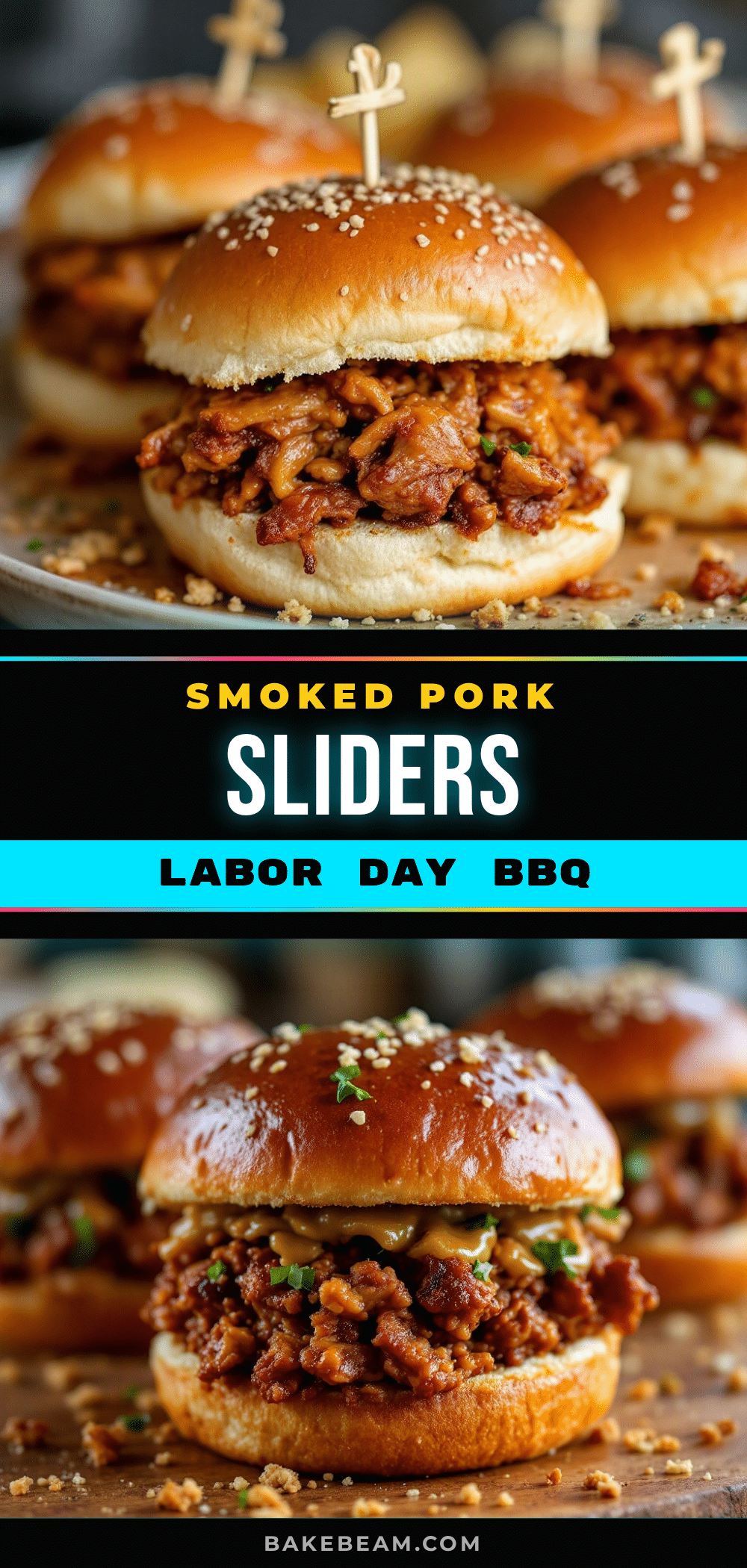
Best Smoked Pulled Pork Sliders for a Perfect BBQ

These smoked pulled pork sliders feature incredibly tender, fall-apart meat with a shatteringly crisp bark, tangy coleslaw, and soft brioche buns. Perfect for a Labor Day cookout or any summer gathering, this recipe delivers the ultimate BBQ experience.
- Prep Time: 15 minutes
- Cook Time: 10-14 hours
- Total Time: 10-14 hours 15 minutes
- Yield: 12-16 sliders 1x
- Category: Main Course
- Cuisine: American
Ingredients
- 1 bone-in pork shoulder (8–10 pounds), Boston butt preferred
- ¼ cup yellow mustard
- ¼ cup apple cider vinegar (for spritzing)
- ½ cup dark brown sugar, packed
- ¼ cup smoked paprika
- 2 tablespoons kosher salt (Diamond Crystal; use half if using table salt)
- 2 tablespoons black pepper, freshly ground
- 1 tablespoon garlic powder
- 1 tablespoon onion powder
- 2 teaspoons cayenne pepper (reduce to 1 teaspoon for less heat)
- 2 teaspoons cumin
- 1 small green cabbage, shredded (about 4 cups)
- 1 cup mayonnaise (Duke’s recommended)
- 2 tablespoons apple cider vinegar (for slaw)
- 1 tablespoon honey
- 1 teaspoon celery seed
- Salt and pepper to taste
- 12–16 slider buns (brioche or potato rolls)
- Your favorite barbecue sauce (Kansas City-style recommended)
- Butter, for toasting buns
Instructions
- Trim and prepare the pork shoulder: Pat the shoulder dry with paper towels. Trim off any excess fat cap, leaving about ¼ inch. Don’t trim the fat between the muscles.
- Apply the binder and rub: Coat the entire shoulder with a thin layer of yellow mustard. Mix all dry rub ingredients together and apply generously to the entire surface. Pat it in firmly. Wrap in plastic wrap and refrigerate overnight (8-24 hours).
- Set up your smoker: About an hour before cooking, take the pork out of the fridge to come to room temperature. Set up your smoker for indirect cooking at 225°F using hickory wood chunks.
- Start the smoke: Place the pork shoulder on the smoker grate, fat side up. Close the lid and don’t open it for at least 3 hours. After 3 hours, start spritzing with apple cider vinegar every 45 minutes.
- Survive the stall: When the internal temperature reaches 160-170°F, it will stall. Wrap the shoulder tightly in heavy-duty foil (Texas crutch) with a splash of apple cider vinegar or apple juice inside.
- Finish cooking: Return the wrapped pork to the smoker at 225°F. Cook until internal temperature reaches 203-205°F. The probe should slide in with no resistance.
- Rest the pork: Wrap the foil package in a clean towel and place in a cooler (no ice) or warm oven (turned off). Let rest for at least 1 hour, preferably 2 hours.
- Shred the pork: Unwrap carefully. Remove the bone. Use two forks or meat claws to shred the pork into bite-sized pieces. Discard large pieces of fat. Pour some reserved juices back over the meat.
- Make the slaw: Whisk together mayonnaise, apple cider vinegar, honey, and celery seed. Add shredded cabbage and toss to coat. Season with salt and pepper. Refrigerate until serving.
- Toast the buns and assemble: Split slider buns and butter the cut sides. Toast on a griddle or skillet over medium heat until golden brown. Pile shredded pork on bottom halves, add coleslaw, drizzle with barbecue sauce, and cap with top buns. Serve immediately.
Notes
Don’t rush the rub—let it sit overnight for best bark. Use the probe test (slide in with no resistance) rather than relying solely on temperature. Don’t overspritz; stick to every 45-60 minutes. Let the meat rest properly for at least 1 hour. Season the slaw generously to balance the rich pork.
Nutrition
- Serving Size: 1 slider (1 bun + 3
- Calories: 380
- Sugar: 8
- Sodium: 650
- Fat: 18
- Saturated Fat: 5
- Carbohydrates: 22
- Fiber: 2
- Protein: 28
Keywords: smoked pulled pork sliders, BBQ sliders, pulled pork recipe, smoked pork shoulder, Labor Day recipe, summer cookout, barbecue sliders