The classroom mom group chat pinged at 9:47 PM. “Don’t forget — tomorrow is Liam’s birthday treat day!” I stared at my fridge. Half a bag of grapes. One slightly sad apple. And a container of strawberries that were definitely on their last day. No time for a bakery run. No energy for a complicated bake. My kid was already asking what we were bringing, and the look on his face said he’d seen enough store-bought cupcakes this month.
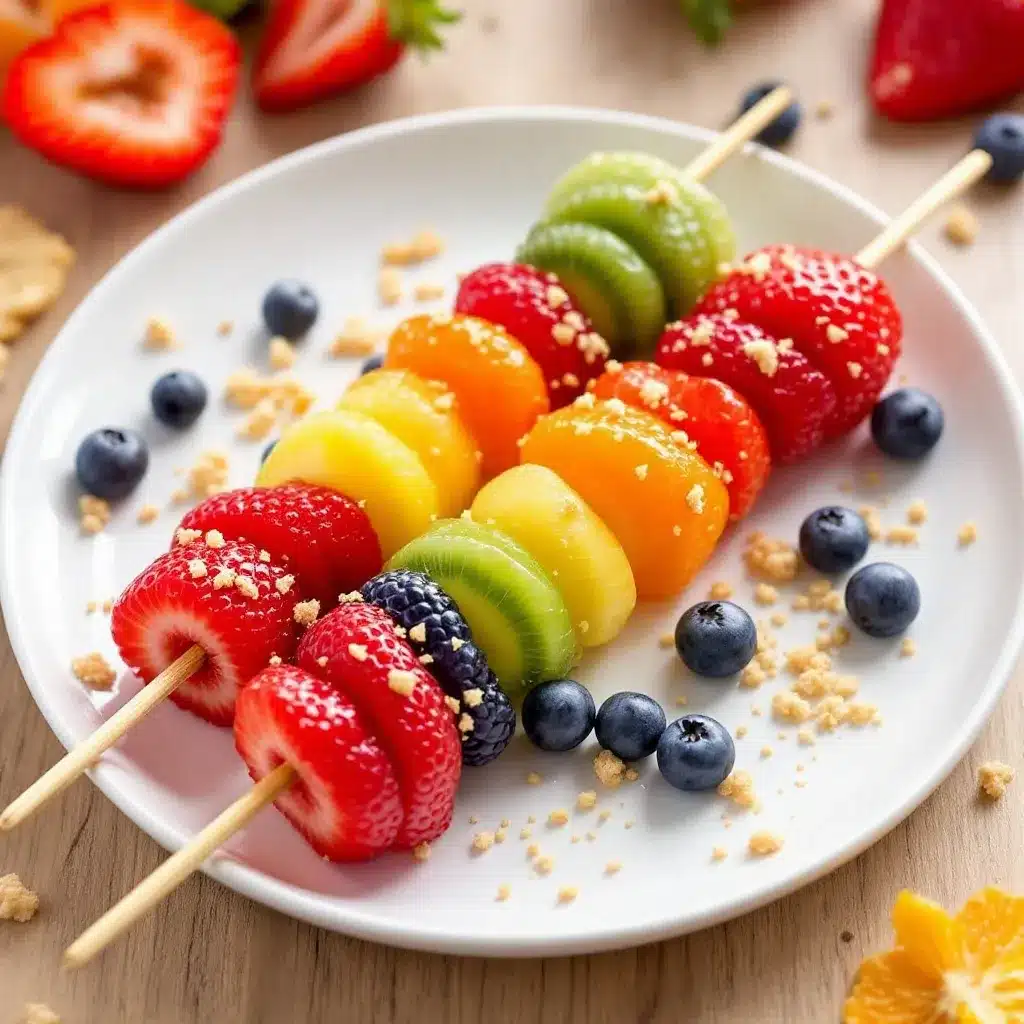
I grabbed fruit from the crisper drawer, a pack of wooden skewers from the back of the pantry, and just started threading. Red, orange, yellow, green, blue, purple — whatever I had, in rainbow order. It took maybe twelve minutes. The next morning, his teacher sent a photo of the platter after snack time. Completely empty. Three other parents asked for the idea. And honestly? That’s how I stopped stressing over classroom birthday treats entirely.
These Easy Rainbow Fruit Kabobs for School Birthday Treats became my go-to for every celebration that walks through the door. They’re bright, they’re mess-free (no sticky fingers on desks!), and they somehow make every kid feel special. I’ve made them for class parties, soccer end-of-season picnics, and even our own backyard birthday bash. They just work.
Why You’ll Love This Recipe
Let me be real with you for a second — school birthday treats can be stressful. Nut policies, sugar limits, picky eaters, and that one kid who can’t have dairy. These fruit kabobs solve all of it in one colorful swoop.
- Totally Allergy-Friendly : No nuts, no dairy, no gluten, no eggs. Just fruit. You can send these into any classroom without a second thought.
- Five Minutes of Prep : Seriously. Wash, chop (if needed), thread. That’s it. You can make a batch of 24 kabobs in the time it takes to preheat an oven.
- Naturally Sweet : No added sugar, no artificial colors. The rainbow comes from real fruit, which means parents love them and kids devour them.
- No Refrigeration Drama : They hold up beautifully at room temperature for a few hours. Perfect for morning parties or afternoon celebrations.
- Visually Unforgettable : Let’s face it — a platter of rainbow fruit kabobs stops kids in their tracks. They grab one before they even ask what it is. The colors do the work for you.
What makes these different from every other fruit platter? It’s the kabob format. Kids love food on a stick. There’s something about it that feels like a treat, even when it’s just fruit. And the rainbow order? That’s the secret. It sparks curiosity, encourages trying new fruits, and makes the whole thing feel like an event. I’ve watched kids who “don’t like fruit” grab a kabob because the colors looked fun. And then they ate the whole thing.
This is the kind of recipe that makes you feel like a hero parent without breaking a sweat. No baking, no frosting, no worrying about ingredient lists. Just pure, joyful, edible rainbows.
What Ingredients You Will Need
The beauty of these kabobs is that you can adapt based on what’s in season or what your grocery store has. But for a true rainbow effect, here’s what I use. Each color group has a purpose, and I’ll walk you through why I choose what I do.
Red Fruits
- Strawberries (hulled and halved if large) — I prefer fresh, local strawberries when they’re in season. They’re sweeter and have that deep red color that pops. If you’re buying off-season, look for berries that are bright red all the way to the stem. Pale shoulders mean they were picked too early.
- Raspberries (optional, for variety) — They add a nice tart contrast and fit perfectly on skewers. Just handle them gently — they’re delicate.
Orange Fruits
- Cantaloupe or Honeydew (cut into 1-inch cubes) — I use a melon baller for a more polished look, but cubes work just fine. Orange-fleshed melon gives that bright sunset color. Look for melons that feel heavy for their size and smell sweet at the stem end.
- Mandarin Oranges (peeled and separated into segments) — Canned mandarins (drained) work in a pinch, but fresh segments hold up better on the skewer and don’t get as slippery.
Yellow Fruits
- Fresh Pineapple (cut into 1-inch chunks) — This is non-negotiable for me. Pineapple adds that tropical sweetness and holds its shape beautifully. I buy pre-cut from the store when I’m in a rush, but cutting a whole pineapple gives you better control over chunk size. Look for pineapples with a golden bottom and fragrant leaves.
- Banana Slices (optional, but brush with lemon juice to prevent browning) — Kids love bananas, but they can get mushy. I usually skip them for school treats unless I’m serving immediately.
Green Fruits
- Green Grapes (seedless) — The easiest green option. No cutting required. Just wash and thread. They’re crunchy, sweet, and hold up perfectly. I recommend organic grapes when possible since they’re on the “Dirty Dozen” list.
- Honeydew Melon (cut into cubes) — If you already have cantaloupe, grab a honeydew too. The pale green color bridges the gap between green grapes and blue berries nicely.
- Kiwi (peeled and sliced into rounds or wedges) — Kiwi adds a pop of bright green and a slightly tangy flavor. Kids either love it or need a little encouragement. The visual is worth including it.
Blue/Purple Fruits
- Blueberries — The MVP of the purple section. They’re small, sturdy, and add that deep blue hue that completes the rainbow. I always use fresh — frozen blueberries get too mushy when thawed.
- Blackberries (optional, for deeper color) — They add a gorgeous dark purple that contrasts beautifully with the lighter fruits. Just be aware they can bleed a little onto neighboring fruits if the kabobs sit too long.
- Purple Grapes (seedless) — A great alternative if blackberries aren’t available. They’re sweeter and hold up really well.
For the Kabobs
- Wooden Skewers (6-inch or 8-inch) — I buy the short skewers meant for appetizers. They’re the perfect size for little hands. You can also use reusable plastic skewers if you want to cut down on waste. Just make sure to cut the sharp points off with kitchen shears for safety.
That’s it. No fancy syrups, no dips, no added sugar. Just fruit in all its natural glory. The rainbow does all the heavy lifting.
Equipment Needed
You don’t need much for this recipe. That’s part of the charm. But having the right tools makes the process smoother.
- Wooden Skewers (6 to 8 inches) — I get these at any grocery store or online. For school treats, I prefer the shorter ones — they fit perfectly in lunchboxes and are easier for small hands to hold. If you’re worried about sharp ends, snip them off with kitchen shears.
- Cutting Board — A large, stable board makes prep faster. I use a plastic one for fruit to avoid any cross-contamination.
- Sharp Knife — A good chef’s knife or paring knife for cutting melon, pineapple, and strawberries. Dull knives crush soft fruit. Trust me on this.
- Melon Baller (optional) — This is a nice-to-have, not a must. It makes melon chunks look uniform and fancy, but cubes work just as well.
- Paper Towels — Pat your fruit dry after washing. Wet fruit makes kabobs slippery and encourages faster spoilage.
- Serving Platter or Tray — A large white platter makes the colors pop the most. I use a rimmed baking sheet lined with parchment paper for easy transport to school parties.
- Kitchen Shears — For snipping skewer points if needed.
If you don’t have melon ballers or fancy cutters, don’t worry. I’ve made these kabobs with just a knife and a cutting board more times than I can count. It still looks gorgeous.
Preparation Method
This is where the magic happens. I’ll walk you through exactly how I make these, including the little tricks I’ve picked up from making them for dozens of school parties.
Step 1: Wash All Your Fruit
Give everything a good rinse under cool water. For berries, I put them in a colander and spray gently — they’re fragile and don’t like being tossed around. Pat everything dry with paper towels. This step matters more than you think. Wet fruit makes the skewers slide around, and moisture accelerates spoilage. I learned this the hard way after a batch of soggy kabobs at my son’s preschool party.
Step 2: Prep Each Fruit
Work through your fruits one color at a time.
- Strawberries — Remove the green tops. If they’re large, slice them in half lengthwise. For smaller berries, leave them whole.
- Melon — Cut off the rind. Slice into 1-inch thick rings, then cut into 1-inch cubes. A melon baller makes this faster, but cubes are perfectly fine.
- Pineapple — Cut off the top and bottom. Stand it upright and slice off the skin in strips. Remove any “eyes” with a small knife. Cut into 1-inch chunks.
- Kiwi — Peel with a vegetable peeler or paring knife. Slice into rounds about 1/2-inch thick, then cut each round in half.
- Grapes — Just wash and dry. No cutting needed.
- Blueberries and Blackberries — Pick through and discard any mushy ones. Rinse gently and dry.
Step 3: Arrange Your Fruit in Rainbow Order
This is the visual secret. Lay out small bowls of each fruit in rainbow order: red, orange, yellow, green, blue, purple. Having them organized this way speeds up assembly and ensures you don’t accidentally skip a color.
Step 4: Thread the Skewers
Start with a red fruit (strawberry or raspberry) at the tip. Then orange (cantaloupe or mandarin). Then yellow (pineapple). Then green (grape or kiwi). Then blue (blueberry). End with purple (blackberry or purple grape).
Push the fruit gently but not too tightly. You want them snug enough to stay in place but loose enough that little mouths can slide them off easily. Leave about an inch of skewer exposed at the bottom for a handle.
Pro tip: If you’re using soft fruits like raspberries or blackberries, thread them last or place them between firmer fruits so they don’t get crushed.
Step 5: Repeat Until Done
One skewer takes about 30 seconds once you get into a rhythm. For a class of 24 kids, I usually make 30 kabobs (a few extras for teachers and the inevitable “I want another!”).
Step 6: Arrange on a Platter
Lay the kabobs in rows on your serving platter. I like to alternate the direction of the skewers so the fruit colors create a mosaic effect. If you’re transporting them, place them on a parchment-lined baking sheet and cover loosely with plastic wrap.
Step 7: Keep Cool Until Serving
Refrigerate the assembled kabobs until you’re ready to leave. They’ll stay fresh for a few hours at room temperature, but starting them cold helps them hold up longer.
Cooking Tips & Techniques
I’ve made a lot of fruit kabobs over the years, and I’ve definitely made my share of mistakes. Here’s what I’ve learned so you don’t have to repeat them.
Don’t overcrowd the skewer. Five to six pieces of fruit per kabob is the sweet spot. Too many and the skewer gets heavy and floppy. Too few and it looks sparse. Rainbow order with one piece per color is perfect.
Cut fruit into uniform sizes. This isn’t just about looks — it’s about ease of eating. If your pineapple chunks are twice the size of your blueberries, the kabob feels unbalanced. Aim for 1-inch pieces across the board.
Use firm fruit. Overripe bananas or mushy strawberries will slide right off the skewer and make a mess. Pick fruit that’s ripe but still has some structure. Underripe fruit is actually fine here — kids don’t mind a slightly tart grape, and it holds up better.
Make ahead? Here’s the trick. You can prep the fruit the night before and store each type in separate containers in the fridge. Assemble the kabobs the morning of the party. This saves time and keeps everything fresh. I’ve done this for early morning school events more times than I can count.
Watch out for fruit that browns. Apples, pears, and bananas are notorious for oxidizing. If you want to include them, toss them in a little lemon juice or pineapple juice (which has natural citric acid). But honestly? I just avoid them for school treats. Stick with fruits that stay bright.
Keep it cold. If you’re serving these outdoors at a picnic or field day, place the platter on a bed of ice or use a chilled serving tray. Fruit can go from refreshing to sad in about an hour in direct sun.
Variations & Adaptations
One of the best things about this recipe is how flexible it is. I’ve adapted it for different seasons, dietary needs, and even picky eaters.
Seasonal Swaps
- Spring — Add fresh apricots, cherries, and early strawberries. Skip the melon if it’s not in season yet.
- Summer — Peak watermelon, peaches, nectarines, and berries. This is the golden age of fruit kabobs. Everything is at its best.
- Fall — Use apples (tossed in lemon juice), pears, and pomegranate arils for the red section. Persimmons add a gorgeous orange hue.
- Winter — Citrus is your friend. Blood oranges, cara cara oranges, grapefruit, and kiwi. Add frozen mango chunks (thawed) for yellow.
Dietary Adaptations
- Low-Sugar — Skip the pineapple and grapes. Focus on berries, melon, and citrus. The kabobs will still be colorful and delicious.
- Keto-Friendly — Stick with berries, avocado (yes, it works!), and cucumber for green. Skip the high-sugar fruits. The rainbow will be more muted but still pretty.
- Nut-Free — Already covered. These kabobs are naturally nut-free, which is why they’re perfect for school.
Fun Twists I’ve Tried
For Halloween, I made “monster kabobs” using green grapes for eyes and blackberries for a mouth. For Valentine’s Day, I stuck to red, pink, and white fruits (strawberries, raspberries, dragon fruit, and banana slices). For the Fourth of July, I did red, white, and blue — strawberries, banana slices, and blueberries. The red, white, and blue berry trifle I made for Labor Day uses the same color scheme, so that recipe is a natural companion if you’re planning a patriotic spread.
If you’re looking for another easy classroom treat that’s just as simple, the sunbutter and jelly uncrustables are a huge hit too. They’re nut-free, quick to make, and pair beautifully with fruit kabobs for a complete snack.
And for those mornings when you need something even faster, the 5-ingredient locker snack mix is my backup plan. It takes three minutes to throw together and keeps in a lunchbox all day.
Serving & Storage Suggestions
These kabobs are best served fresh, but they’re surprisingly forgiving.
Serving
Arrange the kabobs on a large white platter or baking sheet. The white background makes the rainbow colors really pop. If you’re serving at a party, you can stand them upright in a tall cup or mason jar filled with a little fruit juice or water (just make sure the skewers don’t touch the liquid). It creates a beautiful centerpiece that doubles as a snack.
For school parties, I lay them flat on a tray and let kids grab their own. No plates needed — just a napkin to catch any drips. That’s part of the appeal for teachers. Minimal mess.
Storage
Store leftover kabobs in an airtight container in the refrigerator for up to 24 hours. After that, the fruit starts to soften and the colors bleed into each other. They’re still safe to eat, but they won’t look as pretty.
If you’re prepping the night before, store the fruit separately and assemble in the morning. Trust me on this. Assembled kabobs that sit overnight get weepy and the fruit slides around.
Reheating
You don’t reheat fruit kabobs. That would be weird. But if you want to take the chill off, let them sit at room temperature for 10 minutes before serving. Cold fruit has less flavor, so a few minutes out of the fridge helps the sweetness come through.
Freezing
I don’t recommend freezing assembled kabobs. Frozen fruit turns to mush when thawed. However, you can freeze individual fruits (like pineapple chunks or berries) and assemble them frozen for a slushy, popsicle-like treat. Kids love this in the summer, but it’s not ideal for school parties.
Nutritional Information & Benefits
These kabobs are basically a multivitamin on a stick. Here’s the breakdown for one kabob (using average fruit portions):
- Calories: 45-60
- Carbohydrates: 12-15g (all natural sugars)
- Fiber: 2-3g
- Vitamin C: 30-50% of daily value (from strawberries, kiwi, and citrus)
- Vitamin A: 10-15% of daily value (from cantaloupe)
- Potassium: 150-200mg
The health benefits go beyond the numbers. Berries are packed with antioxidants that support immune health. Pineapple contains bromelain, an enzyme that aids digestion. Kiwi is one of the most nutrient-dense fruits you can eat — more vitamin C per gram than an orange. And the fiber from all that fruit helps keep kids full and focused through the school day.
From a wellness perspective, I love that these kabobs let kids enjoy a treat without a sugar crash. There’s no refined sugar, no artificial anything. Just whole food that happens to look like a party.
If you’re concerned about sugar content for dietary reasons, you can easily swap high-sugar fruits (grapes, pineapple) for lower-sugar options (berries, melon). The rainbow still works beautifully.
Conclusion
These Easy Rainbow Fruit Kabobs have saved me more times than I can count. They’ve been my last-minute classroom hero, my “I forgot it was birthday treat day” backup, and my go-to for every party where I want to look like I put in effort without actually putting in effort.
What I love most is how they make kids feel. There’s something magical about handing a child a rainbow on a stick. They light up. They eat something healthy without being told to. And they feel special — like the birthday kid picked out something just for them.
You can customize these kabobs to fit any season, any allergy need, any picky eater. That’s the beauty of them. They’re forgiving, flexible, and foolproof.
I’d love to hear how yours turn out! Did you try a fun variation? Did your kid’s class devour them? Drop a comment below and let me know. And if you’re looking for more easy school-friendly recipes, the ham and cheese pinwheels are another lunchbox favorite that takes almost no time to make.
Happy threading, friends. Your rainbow awaits.
Frequently Asked Questions
Can I make these kabobs the night before?
You can, but I recommend prepping the fruit the night before and assembling them in the morning. Assembled kabobs that sit overnight can get weepy and the fruit may slide around. If you have to assemble them ahead, store them in a single layer in an airtight container lined with paper towels to absorb excess moisture.
What if my school has a no-food policy for birthdays?
Some schools have moved away from food-based birthday celebrations. In that case, you can use these kabobs for after-school parties, weekend playdates, or family celebrations. They’re also great for non-birthday occasions like class rewards or end-of-year parties.
How do I keep the fruit from turning brown?
Fruits that oxidize quickly (apples, pears, bananas) should be avoided for school treats. Stick with fruits that stay bright: berries, melon, pineapple, grapes, kiwi, and citrus. If you really want to include apples, toss them in a little lemon juice or pineapple juice before threading.
Can I use frozen fruit?
Fresh fruit works best for kabobs. Frozen fruit releases too much moisture as it thaws, making the kabobs slippery and the fruit mushy. If you’re in a pinch, you can use frozen fruit that’s still slightly frozen, but it won’t look as pretty and may not hold together well.
How many kabobs should I make for a class party?
I usually make one kabob per child plus a few extras for teachers and staff. For a class of 24, I make 30 kabobs. They always disappear, and teachers appreciate having one too. If you’re serving alongside other snacks, you can scale back to one per child.
Pin This Recipe!
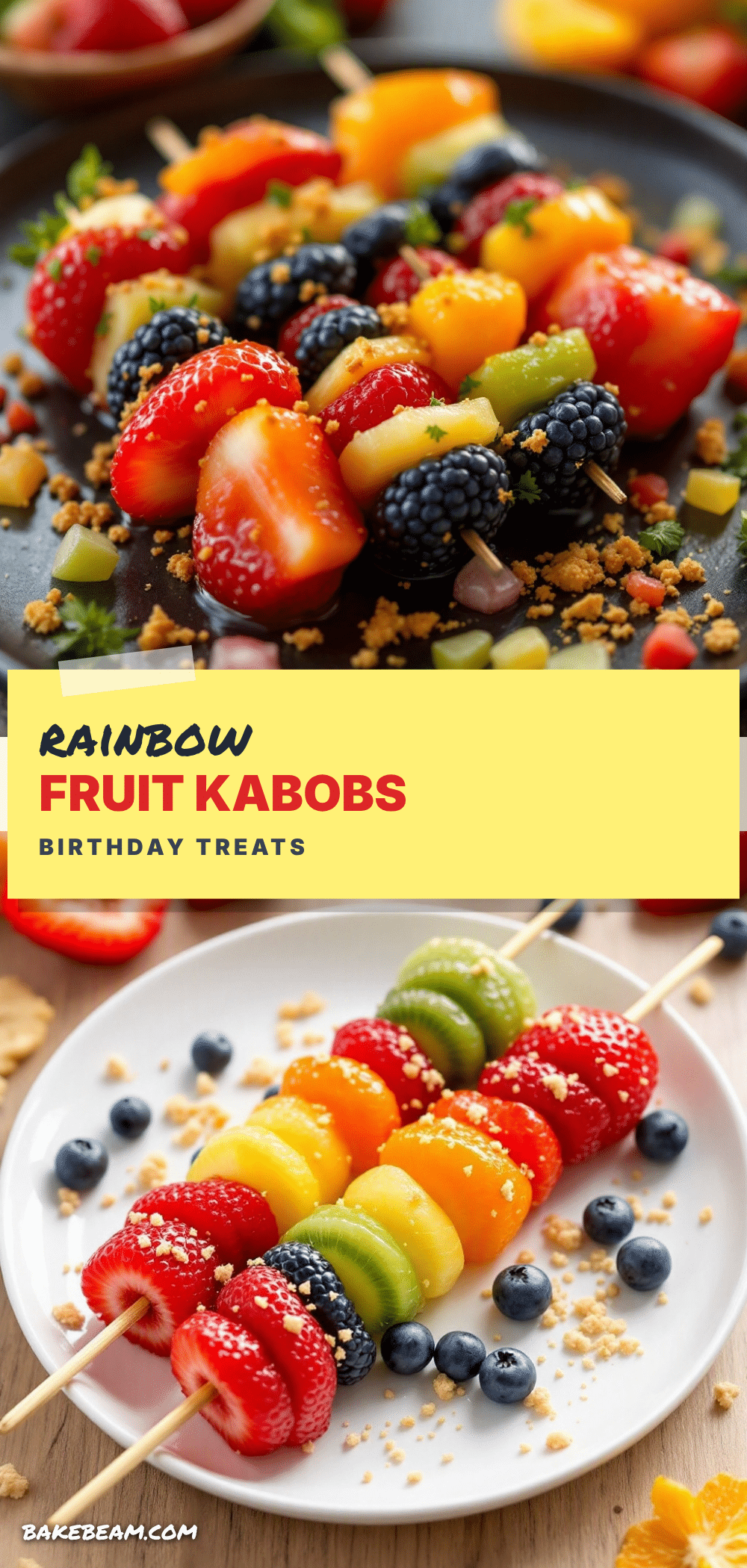
Easy Rainbow Fruit Kabobs: Best Birthday Treat for School
Bright, mess-free, and allergy-friendly rainbow fruit kabobs that are perfect for school birthday treats. Made with fresh fruit in rainbow order, these kabobs take just minutes to assemble and are naturally sweet with no added sugar.
- Prep Time: 15 minutes
- Cook Time: 0 minutes
- Total Time: 15 minutes
- Yield: 24 servings
- Category: Snack
- Cuisine: American
Ingredients
- Strawberries (hulled and halved if large)
- Raspberries (optional, for variety)
- Cantaloupe or Honeydew (cut into 1-inch cubes)
- Mandarin Oranges (peeled and separated into segments)
- Fresh Pineapple (cut into 1-inch chunks)
- Banana Slices (optional, brush with lemon juice to prevent browning)
- Green Grapes (seedless)
- Honeydew Melon (cut into cubes)
- Kiwi (peeled and sliced into rounds or wedges)
- Blueberries
- Blackberries (optional, for deeper color)
- Purple Grapes (seedless)
- Wooden Skewers (6-inch or 8-inch)
Instructions
- Wash all fruit under cool water and pat dry with paper towels.
- Prep each fruit: hull and halve strawberries if large; cut melon into 1-inch cubes; cut pineapple into 1-inch chunks; peel and slice kiwi into rounds or wedges; wash grapes and berries.
- Arrange fruit in rainbow order: red, orange, yellow, green, blue, purple.
- Thread skewers starting with red fruit at the tip, then orange, yellow, green, blue, and ending with purple. Leave about an inch of skewer exposed at the bottom for a handle.
- Repeat until all fruit is used. One skewer takes about 30 seconds.
- Arrange kabobs on a serving platter or parchment-lined baking sheet. Alternate direction of skewers for a mosaic effect.
- Refrigerate until ready to serve. They stay fresh for a few hours at room temperature.
Notes
Don’t overcrowd the skewer; 5-6 pieces per kabob is ideal. Cut fruit into uniform 1-inch pieces for balance. Use firm fruit to prevent sliding. For make-ahead, prep fruit the night before and assemble in the morning. Avoid fruits that brown (apples, pears, bananas) for school treats. Keep kabobs cold if serving outdoors.
Nutrition
- Serving Size: 1 kabob
- Calories: 50
- Sugar: 10
- Sodium: 2
- Carbohydrates: 13
- Fiber: 2
- Protein: 1
Keywords: rainbow fruit kabobs, school birthday treat, allergy-friendly snack, fruit skewers, healthy classroom treat, no-bake snack, kid-friendly fruit kabobs